 |
Headlining are the geniuses of Albert Camus and Salvadore Dali. Followed closely by Schwarzenegger in third place.
|
Friday, 29 June 2012
The geniuses of intuitive genius

Thursday, 28 June 2012
Society and its ills
“Society” and its ills
Man is no longer free to gaze at the heavens and feed his
mouth with the fruits of the earth. He cannot lay down by the green pastures
and sip from the flowing brook. He cannot use his cunning and might to cudgel a
monkey to death and roast its tortured body over a fire, or by his choosing,
spare it! He is not free to explore the jungle-earth in search of knowledge, bounty
and riches. He cannot build his own house, and till his field with his own two
hands! He is not permitted to murder his enemy in some bitter and honourable
dispute. All these things are owed to man, and yet the wicked and greedy, the
cowardly, the boastful, the arrogant, the self-seeking and the proud have
mechanised existence. They have made a wall around their ill-gotten gains in
the form of laws, precepts and duty. Man in society has become a schemer, a
plotter and a fiend.
A MANIFESTO
THE ILLS OF RELIGION
Religion bends man’s lusts and inward and turns him into an
unnatural sex pest, like a catholic priest.
 -THUS Priests should be encouraged to engage in coitus
Religion rationalises by the medium of fear the natural wonder
of existence that is proper to us all
- THUS Priests should be prevented from using fear as a
coercive tool and must be compelled by law to use the Children's Bible, instead of the actual one.
THE ILLS OF THE LAW
The law prevents due revenge and vengeance which is every
man’s right, by offering retribution by proxy.
- THUS a law should be in place that allows the wronged to
punish the wrong doer. The boats, the breaking wheel, head crusher and crocodile
shears are all possible legal punishments.
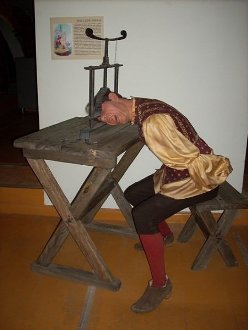 The rich and greedy own the land which belongs to all of us
and take the food from our mouths!
The rich and greedy own the land which belongs to all of us
and take the food from our mouths!
- THUS a large tax should be levied against the rich and the
gains distributed for the good of society.
- THUS the richest man in society must be made to toil in a
rubber fist mine for a year
A man must pay for the very ground upon which to build his
own house!
- THUS each man, without exception should be allotted a plot
of land for his quarters
- THUS machines should till communal fields in place of man,
and pick the orchards, and bring the food to him and the community.
THE ILLS OF THE FACTORY
Man utilises the means of production to sell useless items
and indebt their owners
-
THUS man should create more drug factories, to create a
cheap supply of products
-
THUS man should create a GM bird that he can ride and
feed oats or some such cereal instead of building a car.

Wednesday, 27 June 2012
The meaning of life
Gentlemen, I present to you with all due modesty, THE MEANING OF LIFE.
AND
THE ULTIMATE METAPHYSICAL NATURE OF BEING:
1.) Being, i.e existence itself has no inherent meaning
2.) It is our desire to create morality and meaning in the world
As the sole enforcers of this type of behaviour, we could choose not to act in a meaningful way as there is no punishment for disobaying the rules. But this is to miss an opportunity.
AND
THE ULTIMATE METAPHYSICAL NATURE OF BEING:
1.) Being, i.e existence itself has no inherent meaning
2.) It is our desire to create morality and meaning in the world
MAN URGES HIMSELF TO GIVE MEANING TO A MEANINGLESS UNIVERSE
MAN URGES HIMSELF TO GIVE MORALITY TO AN AMORAL UNIVERSE
As the sole enforcers of this type of behaviour, we could choose not to act in a meaningful way as there is no punishment for disobaying the rules. But this is to miss an opportunity.
Metanormative dialectic
I have of late been wondering how to roll the perfect joint. I told the wizard Wolfram Alpha my query and this is the pith of the response:
 |
| raises more questions than it asks |
Monday, 25 June 2012
Elton John's "and the house fell down" as commentary on Job
"The sun is up and the shades are all pulled down
I'm more paranoid with every little sound
Like the leaf blower blowing the leaves around
And a siren wailing on the other side of town"
I'm more paranoid with every little sound
Like the leaf blower blowing the leaves around
And a siren wailing on the other side of town"
The modest beginnings of the first verse does not betray any deep existential ponderment, a leaf blower, a siren, and pulling down are all mundane themes, John still invokes such timeless images such as the rising sun and the terror of the wind but they are most definately muted by the mundane. In the second verse John does introduce the theme of suffering, and remorse. John tells us that he could be in many places, but what is crucial is that here he is on the precipice, having followed a poor diet of cocaine and wine for three days.John then in this couplet of verses eases us into themes of suffering and angst, whilst backing the apparent misery with an upbeat and groovy piano composition. It is however the chorus that rivals Job, the wolf here representing suffering keeps blowing down his house and what can John do but shake his fist at God?
Tuesday, 19 June 2012
Monday, 18 June 2012
The Anguish of Boredom: Original Sketches
 |
| The Preacher & Camel" |
 |
| "The Aching of the Contact Lens" |
 |
| "The Beurocracy vs. Dinosaurs" |

Sunday, 17 June 2012
Yukio Mishima and the love of St Sebastian.
 |
| It's not my bag |
It is Sebastian’s almost base physicality and masculinity
that instantly strikes us, upon viewing this painting. The dark shadows, the
harsh lines, the piercing gaze, the massive semi-erect penis. If not for the
arrows one would imagine the image to be designed for the purpose of proudly
displaying a person’s authority and achievement. Sebastian in the picture
stands erect and exclaims ecce homo – behold
the man!
Yet there is a white elephant in the room, Sebastian this
symbol of masculinity is seen in the painting as being ravaged by a swarm of
arrows, (an obvious reference to the traditionally dominant phallus). Why is Sebastian
a paragon of masculinity so often portrayed as being humbled by the phallus? Why
is this sadomasochistic perspective seen as so erotic by writer’s such as Mishima? For the answer to the latter we must look deep into the mind of the great poet and writer.
Mishima’s childhood was rife with difficulty, he was often
sick with tuberculosis and and was only allowed to associate with “weaker”
female relatives for fear he would be bullied by boys his own age. In the
beginning of “Confessions of a Mask” Mishima often escapes the sufferings of
worldly existence by escaping into a world of sadism and dominance. His actual
sufferings giving rise to imaginary sadistic triumphs. As Mishima grows this
striving for dominance takes on a sexual aspect, he writes:
“I cried sobbingly until at last those visions reeking with
blood came to comfort me. And then I surrendered myself to them, to those
deplorably brutal visions, my most intimate friends.”
It is logical to assume that in the case of Mishima this early
repression of the will to power led to a rebound of the ID – an explosion of
sadism. The will to power that had been repressed and denied him in his
childhood grew exponentially more violent in adulthood. Yuko Mishima strives from his mid twenties to be a real-life Sebastian,
ceaselessly exercising with heavy
weights, each day trying to fit his ever bulging muscles into his spandex
pants. Tiring to become like the heroic and ever masculine Sebastian.
 |
| Sexy |
We see in the life of St Mishima then a pattern, a childhood of submission, a rebound and an adulthood of sadism and dominance.
And yet like Sebastian Mishima wants to die, and indeed declares that it would gratify him, to "die among strangers beneath a cloudless sky".In November 1970 Mishima commits Japanese ritual disembowelment (seppuku) in the back room of a military compound. For the reason why we must look to Sebastian.
Sebastian is the key to Mishima's entire oeuvre. As Mishima plunges the blade into his abdomen. He is reduced once more to his childhood weakness and surrenders to the power of death. Mishima who strove all his adulthood to become masculine is seen here secretly craving domination and the power of another man's willy (represented by death). Thus Mishima the Sadist becomes the Mishima the Submissive in death, completing his darkest desires and finally creaming his pants. Mishima is not only a sadist but a masochist and indeed his masochism finally overpowers his potent sadism.
Sebastian is the key to Mishima's entire oeuvre. As Mishima plunges the blade into his abdomen. He is reduced once more to his childhood weakness and surrenders to the power of death. Mishima who strove all his adulthood to become masculine is seen here secretly craving domination and the power of another man's willy (represented by death). Thus Mishima the Sadist becomes the Mishima the Submissive in death, completing his darkest desires and finally creaming his pants. Mishima is not only a sadist but a masochist and indeed his masochism finally overpowers his potent sadism.
 |
| RIP |
Saturday, 16 June 2012
A Lesson
Kristos came and kristos went
Kristos saved and kristos spent
-the preacher spoke
So eloquent
Within his pulpit, as a nest
At voicing god he was the best
An eagle on the scriptures fed
Or vulture, as on man’s carrion read
A man of God in vestments pure
But fell unto the vestal’s lure
For in the crowd below did spy
A woman fit for heav’nly eye
And to this prey he did pursue
And by her scorn, his lusts, they grew
Until one sermon spent and wrecked
He came unto her, so bedecked
In rosen garb with golden crown
A wealth fit to upturn any frown
And in the shadows of the cloister
By his own art her loins grew moister
And at the climax, he gasped at last
“For I am man, from God I part”
And now he roves the world anew
For from this moment, passions grew
And now his want is never sated
For by this act, new want created.
So brothers, here this warning wicked
The devil had his weakness tricked
Thus heed not the damsels fine
Or face the toil of Satan’s mine.
Kristos saved and kristos spent
-the preacher spoke
So eloquent
Within his pulpit, as a nest
At voicing god he was the best
An eagle on the scriptures fed
Or vulture, as on man’s carrion read
A man of God in vestments pure
But fell unto the vestal’s lure
For in the crowd below did spy
A woman fit for heav’nly eye
And to this prey he did pursue
And by her scorn, his lusts, they grew
Until one sermon spent and wrecked
He came unto her, so bedecked
In rosen garb with golden crown
A wealth fit to upturn any frown
And in the shadows of the cloister
By his own art her loins grew moister
And at the climax, he gasped at last
“For I am man, from God I part”
And now he roves the world anew
For from this moment, passions grew
And now his want is never sated
For by this act, new want created.
So brothers, here this warning wicked
The devil had his weakness tricked
Thus heed not the damsels fine
Or face the toil of Satan’s mine.
Friday, 15 June 2012
a story
“Gimp”, yelled Badger to one of the local school boys. The
boy was scared by the badger, with its big teeth and beady little eyes, and
Badger knew it and took great pleasure in his ability to scare school children.
As tears began to well up in the child’s eyes the badger turned and proudly
walked away. Badger could play saxophone very well and performed two nights a
week in the village jazz bar, his band Jazz Badger and the Supremes performed a
mix of soul and early jazz music, not unlike the style in which the human Barry
White performs, though his violent essence personified in the music often led
to misplaced shrill, high notes and dull heavy drones.He also took pleasure in this aspect of his being.
Tuesday, 12 June 2012
Surreal Poetry
The sandman eats his own sand
The snake eats its own tail
Schism of a boneless hand
Sea buoyant shores derail
Unborn folly of the gods
Old and dying flame
See Kaiser to his subject nods
Sew whips unto his name
Crumbling wall and drying blood
Dark path and close'd door
The ever present virgin would
But for the present whore
Thursday, 7 June 2012
A Mallard, Caught in Situ

I was happening to amble about the district park the other day, when in the corner of my eye I took vision of a most singular bird. This fine example of the avian form lingered only to allow me to snap one picture, before flying off into the sky, trailing stardust and mumbling indistinctly to itself. I present this one image here, for you delectation.
Wednesday, 6 June 2012
How fly is Nate Dogg?
The is no question that Nate D-o-double-g is indeed fly. But how fly? That is what I wish to examine in this post. Through a few thought experiments.
"Thought experiments are devices of the imagination used to investigate the nature of things. Thought experimenting often takes place when the method of variation is employed in entertaining imaginative suppositions. They are used for diverse reasons in a variety of areas, including economics, history, mathematics, philosophy, and physics."
We shall now assess the most probable outcomes in the following imagined situations.
Saturday, 2 June 2012
Peter Jackson's Movie Trilogy Lord of The Rings: A Fertility Parable
Argument
Any study of The Lord of the Rings will always be coloured by the obvious controversy that still abounds regards the relationship between the primary protagonists, Frodo and Sam. As People Magazine famously quipped, ‘did they do it?!?!’ However, I believe under this flaming tale of unrestricted gay desire there is something deeper, even more elemental than a mere craving for Hobbit booty. Therefore leaving the explicit commentary of Frodo and Sam's relationship concerning the fluid boundaries between homosocial and homosexual behaviour in a male-male partnership to one side, here I shall instead consider the implications of Lord of the Rings as a Genesis-type fertility parable, if you will.
This analysis will primarily focus on the mortal races; it is clear the elves in Tolkien's strict catholic prose are allegories for and synonymous with the Nephilim, an immortal, angelic race possessing superior physical capabilities from a far off location (The Heavenly Firmament, The Grey Havens) who mate with mortal mankind (consider Aragorn and his hot elf ho.)
Despite this, there is still much argument in the academic community at how far such an argument can be taken. Is this epic a thinly veiled portrayal of overcoming infertility, represented by the forces of darkness, the orcs who cannot love or make dirty coitus, who are birthed from the earth itself? Sex is everywhere and nowhere in Tolkien, omnipresent and yet denied even when at it's most obvious.
Therefore here I will consider both an argument for, and an argument against a reading/viewing of Lord of the Binge as an ancient Mesopotamian Fertility Epic. First Sam the inseminator will be considered, and then an opposite argument using Éowyn as an example of female independence.
An Argument For Fertility: Samwise "The wise" Gamgee, Professional Gardener, Gimp and Fatty.
Sam is perhaps not the most obvious character with regard to fertility within The Lord of the Cock Rings, given his oft regarded romantic relationship with his 'employer' Frodo Baggins. While this commentary on social exploitation of the working classes through a subliminal BDSM narrative implicit in their relationship is fodder for a separate analysis, it may be productive to consider it briefly here.
Sam is subservient, oppressed, scorned, and yet loyal like a lobotomised cocker spaniel to his master Frodo. He is the only one shown cooking, or performing many of the other necessary activities on their extended camping trip. Meanwhile Frodo sits on rocks or tufts of earth, sweating, mewling, and looking into the middle distance. Is this, as Wilde put it, "the love that dare not speak it's name"? Or is it instead a comment on the exploitation of lower classes by a fundamentally weak and unstable oligarchy, here represented by Frodo. Once the police and army break down (here symbolised by the Fellowship, particularly Aragorn, and the spilt at the end of the fist book/film) little stops these two polarised groups from coming into conflict, culminating in Frodo's dismissal of Sam. Like the horse Boxer in Orwell's Animal Farm, Sam is loyal to the last, even when it conflicts with his own interests. Perhaps this is a comment on modern media's ability to be used to penetrate and manipulate the masses into voting against their interests, or perhaps it is too early to say.
However, Frodo finds that, abandoned by Gollum, representative of decedent and unrestrained desire, he needs his 'dear Sam.' At this moment the typically passive Sam comes to the fore, and slays the spider Shelob. Is it any wonder that such a brazen allegory for the web spinning ability of contemporary middle and upper class consumerist culture is a giant spider? It seems facetious to think otherwise. Here, unlike Boxer's fixation that "Napoleon is always right," Sam has finally transcended the yoke of the lower classes, and taken control. However, he has done so to rescue his educated master. The masses cannot survive, it seems, without some educated elite to guide them, though this elite must be now weakened, as the ring weakens Frodo. Now, as in Mordor, it is the masses who drive the nation forward, as Sam carries the feeble Frodo to Mount Doom.
With this brief aside in mind, it is now time to turn to the case of The Lord of the Onion Rings as a parable primarily concerned with Sam's fertility, and his claiming of Phallic privilege and exclusivity of procreation with the hobbitslut barmaid Rose "Rosie" Cotton.
Before Sam's adventure he desires thiswoman Hobbit wench, but is unable to act. His fear and his subservience overcomes his masculine urge for coital intimacy. Here Frodo is seen as the a-typical 'bro' at the party. Beer is flowing, the wenches are dancing and Brodo tries to convince Sam of the virtues of making a move. Frodo is a capable wingman, but he fails. Sam does not get lucky. He is paralysed by fear of the female, especially in it's most seductive of forms, Rosie. Paradoxically it is her very appeal to him that causes him to be unable to approach her.
On his return. however, Sam is a transformed man. He asserts his masculine phallic authority by siring thirteen children from his woman while she is of healthy mating age, and, not content with his dominance over the female other, he asserts control over the male population through his long career as Hobbit Mayor, a role equitable in contemporary terms with the powers of the Deputy Prime Minister. Though he is arguably in a position of power of the 'little folk' of the Shire, in reality his influence is negligible on the wider Middle Earth stage.
Nevertheless Sam has asserted himself as fertile, although like Abraham it took a journey and many hilarious adventures to achieve it. This is in direct contrast to Frodo, who returns a celibate monk compared to his prior bro-ishness. The two roles have become inverted by associated and overexposure; just as proximity to the Ring warps Frodo closer to it, the time Frodo and Sam spend together, huddled together for warmth on cold and rainy nights gives rise to a mimetic transformation. They come to emulate each other, and slowly become each other. Frodo becomes the feminine, whimpering supplicant to Sam's proactive masculine heroics.
However, a spiritual transference with Frodo is not the sole source of Sam's new found fertility; that alone has not given new life to his withered seed like Elisha in the Valley of the Dry Bones. While in the Shire, Sam is exposed to the endless and bountiful exuberance and vitality of the Hobbits, and their undeniable fertility. As a result he feels lost, unable to compete with their happy harvests, another sign of fertility, in the very earth itself. As a gardener Sam understands this; he can nurture flowers and vegetables to maturation, yet he cannot create life himself. His very profession is an endless reminder of his impotence. No wonder he takes to practicing it outside Frodo's window in the middle of the night; in the daylight, his flaws are too apparent for him to be able to stomach.
But in his travels, Sam passes through lands barren, or ravaged by war. Weathertop, Moria, Icthillion, Gondor, Osgiliath, The Misty Marshes, Emin Muiel, Minas Morgul and finally Mordor itself. All of these locations have been made infertile, unable to support or produce life any longer. They are simply places of death, of perpetual conflict. As Homer puts it in the Iliad, 'war never ends.' The war in these barren climes is total and immortal, and in the face of all this destruction of life Sam becomes aware of his own life and fertility that he carries within himself. A sense, perhaps, of 'heroism' this becomes more and more pronounced in Sam the more adversity he faces. Sam discovers his internal fertility when set against the bleakness of Middle Earth, it is the only way his psyche can survive the trauma of war he witnesses. To escape the effects of PTSD, Sam externalises his inner peace, his inner goodness, and is able to conquer the darkness. Furthermore, when he gets home, he brings this fresh ability with him, and is able to seduce and procreate with a vigour that would put a rabbit to shame.
An Argument Against Fertility: Éowyn, The Sterile Warrior Mother
However, Éowyn seems to turn this fertility narrative on it's head, or at least provide a female counterpart to Sam's 'male mothering' of Frodo. Her repeated attempts to penetrate masculinity and overcome her natural femininity and the prejudice that occurs see her struggling against the very idea of fertility and the female role as a vessel for procreation. Her people are 'horse lords' and the horse has long been a symbol of unfettered virility and masculine expression. She is a (frumpy) woman cut loose in a patriarchy where a man's worth is measured by the length of his beard and his ability to shout.
However, Éowyn blends masculine and feminine gender roles to create a hybrid persona which fits both her ambition but also her maternal urges. Against her father's wishes she sallies out to battle, and, as well as slaying many disgusting (totally not Moor allegory) orcs, she kills a motherfucking Oliphant. The destruction of this masculine symbol of phallic compensation shows her triumph over the patriarchy through emulation. She acts like a man, she fights like a man, she is a man.
And yet she achieves something more. By bringing along the small, boyish Hobbit Merry, she plays the role of his surrogate mother. Under her influence he transforms from a foolish young rapscallion into a man, a warrior in his own right. She guides him in a second childhood, and both of them act out the child-mother relationship. This is a relationship that oozes in Freudian tensions and desires. Merry is clearly in love with his mother, and sexually desires her, but, due to his tiny Hobbit manhood, is unable to meet her demanding needs, finding himself eventually replaced by Faramir, another Surrogate she nurses back to health from near death. Here she is able to project her maternal desires onto a male of the same race, and as a result is also able to finally consummate her otherwise sick and twisted desires. Merry is left jilted, but learns from this experience. His true love lies with Pippin; both Hobbits, though in rival factions like Romeo and Juliet in Shakespeare's Romeo and Juliet, have achieved martial prowess, and as such affirmed their masculinity. No longer in crisis and feeling emasculated and vulnerable due to their diminished stature. they are able to consummate their love without these insecurities which previously prevented them from opening up their hearts to one another.
However, by finding and rearing a surrogate son, Éowyn forgoes coitus in preference to an immaculate conception of sorts. She will not submit to the patriarchy, and as such will not suffer to be made vulnerable by the sexual act or by pregnancy. Her role is sexually gendered masculine at all times, hence the penetrative sword she brandishes. This is the sword with which she slays the dreaded Witch King, itself an gendered oxymoron playing on concepts of the evil (fe)male monarch, providing an empty 'other' onto which she can project herself and her virtues as she now becomes a female monarch with the death of Theoden.
Finally, by severing the phallic neck of the Fell Beast and removing it's aggressive, drooling head, Éowyn is asserting a new type of female masculine virtue. She is both an emasculator, a castrator of men in the mould of the bride from Kill Bill, but also very much a woman, protecting herself and the king from a violent 'rape' at the maw of the Beat. There is no need for the phallus in the new word Éowyn creates for herself, the final symbol of the patriarchy has been undone. She has made herself wilfully sterile, and yet also a mother. Men have no control over her or her reproductive ability, instead she is the commanding mother to men.
 |
| Just Friends, OK. |
This analysis will primarily focus on the mortal races; it is clear the elves in Tolkien's strict catholic prose are allegories for and synonymous with the Nephilim, an immortal, angelic race possessing superior physical capabilities from a far off location (The Heavenly Firmament, The Grey Havens) who mate with mortal mankind (consider Aragorn and his hot elf ho.)
Despite this, there is still much argument in the academic community at how far such an argument can be taken. Is this epic a thinly veiled portrayal of overcoming infertility, represented by the forces of darkness, the orcs who cannot love or make dirty coitus, who are birthed from the earth itself? Sex is everywhere and nowhere in Tolkien, omnipresent and yet denied even when at it's most obvious.
 |
|
An Argument For Fertility: Samwise "The wise" Gamgee, Professional Gardener, Gimp and Fatty.
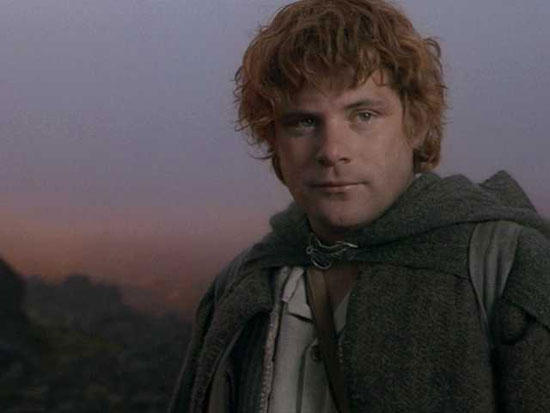 |
| Brooding |
 |
| The Worker's Struggle |
However, Frodo finds that, abandoned by Gollum, representative of decedent and unrestrained desire, he needs his 'dear Sam.' At this moment the typically passive Sam comes to the fore, and slays the spider Shelob. Is it any wonder that such a brazen allegory for the web spinning ability of contemporary middle and upper class consumerist culture is a giant spider? It seems facetious to think otherwise. Here, unlike Boxer's fixation that "Napoleon is always right," Sam has finally transcended the yoke of the lower classes, and taken control. However, he has done so to rescue his educated master. The masses cannot survive, it seems, without some educated elite to guide them, though this elite must be now weakened, as the ring weakens Frodo. Now, as in Mordor, it is the masses who drive the nation forward, as Sam carries the feeble Frodo to Mount Doom.
With this brief aside in mind, it is now time to turn to the case of The Lord of the Onion Rings as a parable primarily concerned with Sam's fertility, and his claiming of Phallic privilege and exclusivity of procreation with the hobbit
Before Sam's adventure he desires this
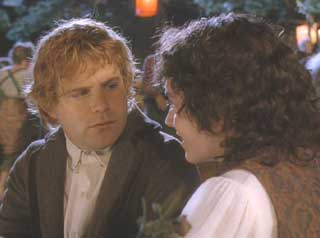 |
| Bro-do and Sam Mid Party |
On his return. however, Sam is a transformed man. He asserts his masculine phallic authority by siring thirteen children from his woman while she is of healthy mating age, and, not content with his dominance over the female other, he asserts control over the male population through his long career as Hobbit Mayor, a role equitable in contemporary terms with the powers of the Deputy Prime Minister. Though he is arguably in a position of power of the 'little folk' of the Shire, in reality his influence is negligible on the wider Middle Earth stage.
Nevertheless Sam has asserted himself as fertile, although like Abraham it took a journey and many hilarious adventures to achieve it. This is in direct contrast to Frodo, who returns a celibate monk compared to his prior bro-ishness. The two roles have become inverted by associated and overexposure; just as proximity to the Ring warps Frodo closer to it, the time Frodo and Sam spend together, huddled together for warmth on cold and rainy nights gives rise to a mimetic transformation. They come to emulate each other, and slowly become each other. Frodo becomes the feminine, whimpering supplicant to Sam's proactive masculine heroics.
However, a spiritual transference with Frodo is not the sole source of Sam's new found fertility; that alone has not given new life to his withered seed like Elisha in the Valley of the Dry Bones. While in the Shire, Sam is exposed to the endless and bountiful exuberance and vitality of the Hobbits, and their undeniable fertility. As a result he feels lost, unable to compete with their happy harvests, another sign of fertility, in the very earth itself. As a gardener Sam understands this; he can nurture flowers and vegetables to maturation, yet he cannot create life himself. His very profession is an endless reminder of his impotence. No wonder he takes to practicing it outside Frodo's window in the middle of the night; in the daylight, his flaws are too apparent for him to be able to stomach.
But in his travels, Sam passes through lands barren, or ravaged by war. Weathertop, Moria, Icthillion, Gondor, Osgiliath, The Misty Marshes, Emin Muiel, Minas Morgul and finally Mordor itself. All of these locations have been made infertile, unable to support or produce life any longer. They are simply places of death, of perpetual conflict. As Homer puts it in the Iliad, 'war never ends.' The war in these barren climes is total and immortal, and in the face of all this destruction of life Sam becomes aware of his own life and fertility that he carries within himself. A sense, perhaps, of 'heroism' this becomes more and more pronounced in Sam the more adversity he faces. Sam discovers his internal fertility when set against the bleakness of Middle Earth, it is the only way his psyche can survive the trauma of war he witnesses. To escape the effects of PTSD, Sam externalises his inner peace, his inner goodness, and is able to conquer the darkness. Furthermore, when he gets home, he brings this fresh ability with him, and is able to seduce and procreate with a vigour that would put a rabbit to shame.
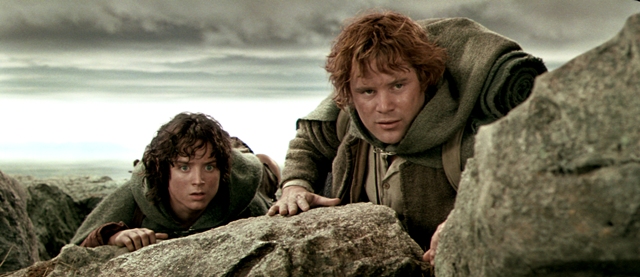 |
| "Mister Frodo, she's at least an eight. Dibs." |
An Argument Against Fertility: Éowyn, The Sterile Warrior Mother
However, Éowyn seems to turn this fertility narrative on it's head, or at least provide a female counterpart to Sam's 'male mothering' of Frodo. Her repeated attempts to penetrate masculinity and overcome her natural femininity and the prejudice that occurs see her struggling against the very idea of fertility and the female role as a vessel for procreation. Her people are 'horse lords' and the horse has long been a symbol of unfettered virility and masculine expression. She is a (frumpy) woman cut loose in a patriarchy where a man's worth is measured by the length of his beard and his ability to shout.
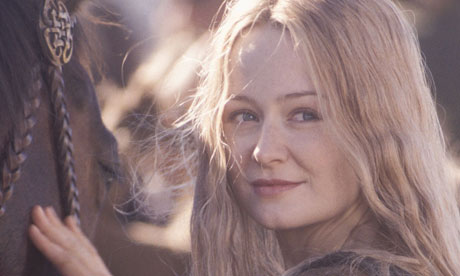 |
| What a Horse |
And yet she achieves something more. By bringing along the small, boyish Hobbit Merry, she plays the role of his surrogate mother. Under her influence he transforms from a foolish young rapscallion into a man, a warrior in his own right. She guides him in a second childhood, and both of them act out the child-mother relationship. This is a relationship that oozes in Freudian tensions and desires. Merry is clearly in love with his mother, and sexually desires her, but, due to his tiny Hobbit manhood, is unable to meet her demanding needs, finding himself eventually replaced by Faramir, another Surrogate she nurses back to health from near death. Here she is able to project her maternal desires onto a male of the same race, and as a result is also able to finally consummate her otherwise sick and twisted desires. Merry is left jilted, but learns from this experience. His true love lies with Pippin; both Hobbits, though in rival factions like Romeo and Juliet in Shakespeare's Romeo and Juliet, have achieved martial prowess, and as such affirmed their masculinity. No longer in crisis and feeling emasculated and vulnerable due to their diminished stature. they are able to consummate their love without these insecurities which previously prevented them from opening up their hearts to one another.
 |
| Another Hobbit Fantasy |
However, by finding and rearing a surrogate son, Éowyn forgoes coitus in preference to an immaculate conception of sorts. She will not submit to the patriarchy, and as such will not suffer to be made vulnerable by the sexual act or by pregnancy. Her role is sexually gendered masculine at all times, hence the penetrative sword she brandishes. This is the sword with which she slays the dreaded Witch King, itself an gendered oxymoron playing on concepts of the evil (fe)male monarch, providing an empty 'other' onto which she can project herself and her virtues as she now becomes a female monarch with the death of Theoden.
Finally, by severing the phallic neck of the Fell Beast and removing it's aggressive, drooling head, Éowyn is asserting a new type of female masculine virtue. She is both an emasculator, a castrator of men in the mould of the bride from Kill Bill, but also very much a woman, protecting herself and the king from a violent 'rape' at the maw of the Beat. There is no need for the phallus in the new word Éowyn creates for herself, the final symbol of the patriarchy has been undone. She has made herself wilfully sterile, and yet also a mother. Men have no control over her or her reproductive ability, instead she is the commanding mother to men.
 |
| Pre Castration |
Wednesday, 30 May 2012
Friday, 25 May 2012
The Dodger
I
I lay the ripe leek on the silver counter. I plough a gentle
furrow through the white and grassy flesh with my charmed cutting edge. I
prepare life upon the altar of the cutting counter. I place the bits into the
broth. I am the high priest, the provider, the shepherd. I alone choose who
lives and who eats and who withers and pines away in hunger!
Carved commandments onto the paper, my inscriptions! Leek
soup it is. And who shall share in my feast! The dregs are lining up, students,
pompous intelligentsia, and yet they rely on me, Chef, to prolong them. The years have been kind to me, a man of
fifty five, and yet I still see the ruins of an ancient Adonis in the mirror
when I look, strong cheekbones, a sturdy jaw, a movie star hunk of a man. My
white overall is stained with the evidence of my good deeds, it takes skill,
skill and love to create; to make, to understand the art of The Chef. A spear
of light breaks o’er the roof of my temple high noon, eleven-forty-five and the
haddock is not yet broiled! The eggs tumble in their pot. He took the bread,
and the eggs, and leek soup he did make, and haddock with chips. And he did
give them life. All is in order, the implements are in their trays, it is time
for the mass of life and today I give the sermon. The doors I fling ajar.
Jupiter stands clad in an apron, beckoning. The feast begins!
Take for instance one
of my eggs. A goose laid it, a farmer nurtured it with his homely
caress, and I prepared it, to be consumed, here, in this sanctum.
This is law; this is how god intended it to be. It is nature’s
order. There are those who do not respect this divine chain, there
are those who wish to steal from my kitchen and by extension steal
from mother earth, at these times my muscular body quivers with
anger. But regrettably my powers here are restricted to only harsh
words and warnings.
What right does a thief
have to take from my temple? Without the consent of the high priest!
Make no mistake, I am god here; an erudite man; this aged Adonis has
a formidable intellect... And I do sweat and toil! And often wane
under life’s yolk. I provide for these people, these students!
These apprentices! They should respect the order as I do. As we all
should do.
My kitchen is palatial,
well equipped cookers stand in the corner, great wombs of life, and
ladles the forceps! Great silver furnaces, I turn knobs and reality
bends to my mighty will. Here I am master king and genius; here I am
Saturn, and Jesus, and bearded Moses and Elijah and pharaoh, Tsar!
The altar boys and acolytes cleanse the temple of Waste. I almost
burst at that the thought of food. How the broth seeps and trickles
into the mixture, life within life, doubled and tripled and
quadrupled in organic and orgasmic ecstasy. Some cannot see or
respect the sanctity of Food and of manna and of Life. These people
are degenerates, philistines petty pieces of decadent grubby filth; a
cockroaches in my kitchen.
Grain upon grain, flesh
upon flesh, blood upon blood, life into life, I know what I am, I
know my calling. I do not of course, and as a matter of principle
inform my colleagues of my views. To them I am just a chef, perhaps
even in their eyes a mediocrity, how they a wrong! They are such
fools, parochial in view, in vision myopic, followers of their
passions. I am more of an Apollo, a rational man, a stoic; even an
ascetic, I suppress my senses, I provide Life, and Life provides for
me, and on my headstone it shall say ‘giver of life’. I am a
Jesuit of the onions, a Cistercian of sprouts, a Trappist of the
order of the carrots, an abbot of duck and guinea fowl, a high priest
of mashed potatoes, cardinal of chips and pope of the Sunday roast. I
follow these Foods, these life givers, I watch them and I know their
ways. And they know me, and by them we are all made flesh, their
flesh to our flesh, onion, into placenta, a chip becomes an umbilical
chord, a pea a winking eye. That egg, that piece of bread it could
become a little sperm, a tadpole a life bringer to a new Ramsay or
Oliver or Rhodes.
Where is that egg now?
That precious sustaining piece of reality, languishing away in his
room, the toast covered in spores, rotting, decaying and putrefying,
going to waste! A sandwich here he steals, there an extra cup of
juice, all adding to his corpulent and disgusting body. He is taking
more than his fair share of Food, of Life, of Reality.
The Dodger is here,
bright and early I see, I watch him like a hawk, let me be clear
here, The Dodger is no more an entity than Evil or Justice, it is
more accurate to say that The Dodger is instantiated in certain
persons, and indeed often in more than one person at once. Just as
any number of persons can be Sad or Wicked or Pitiful so can any
number of people be The Dodger. I confess even I, Chef have dodged
once or twice. But though penance and fasting I have managed to keep
The Dodger at bay in my heart, if only others would be so prudent!
There is one particular student whom I particularly despise; he comes
closest to the perfect Dodger. His heart is as black as sackcloth of
ashes, his eyes piercing abysses his mouth knows only greed. He is
ravaged by his senses. It is he who took a precious boiled egg, he
who stole three of my sandwiches he stole toast too, hidden under his
fleece. This I took to be the crowning insult. Wheat, pressed, milled
and pressed, and stolen! He has stolen from the earth itself and me
its minister.
I turn towards home.
Morag is my wife, a fine woman, plump breasted and good natured. I
wonder what she’s doing, knitting, or boiling a haggis or slicing
potatoes into chips. Oh and how she can cook. Chickens and geese and
grouse and tripe and kidneys! I sit on the couch next to Morag, that
old crone, but her face has blossomed over the years, like a
cauliflower of overwhelming potency. I see myself in the role of a
Zarathustra a prophet and seer of the world to come. We must all grow
and nurture and Cook, we must all become Chef! I am, I say without
false modesty, that I am what Nietzsche describes as the Übermensch,
the over-man, the one to whom so many owe their existence. Who can
exist without Food, and who can survive on raw food alone? Is Chef
not the most noble of professions? Does not cooking fill that deepest
holy of holies within our very souls?
Morag is not so
talkative these days; we both like our food it has been said. But can
anyone comprehend the extent? Can Morag comprehend the extent of my
love for, for example a pear? These questions are and forever will be
a mystery; even the question itself contains masked within it
thousands of others, barbed clauses, necessary implications,
existential and ontological ramifications. Is it not our greatest
scientists that describe the universe as a bagel? Is it not an apple
that inspired Newton and caused the Fall of Man? Is a baguette not a
symbol of pride and hubris, and wine of lust and jealousy? Does not
cheese represent putrefaction and decay? Is not the onion the arête
of subtlety?
I see them, the dregs
in the Hall, a hall of residence, but who resides there? Morons
obsessed with mathematics and logic and science! But not food, the
very thing! The very thing that makes us what we are! Its texture,
its taste, its feel on the tongue, coarse and so often smooth and yet
sour and saccharine, paradox upon paradox and experience upon
orgasmic experience. I pity them. Does Jesus not appear in crisps and
toast and such and such? How can people be so blind, how can people
Dodge the natural order! I have to sleep.
I am tournant, garde
manger, and boucher, rôtisseur and pâtissier, saucier and
poissonnier, grillardin, friturier, entremetier, legumier. I have so
many incomprehensible facets, so many skills, and so many loveable
assets. I continually renew myself. Chef can never tire of Chef. He
knows no self-disgust.
I have begun to see
reality as a glorious dichotomy of Chef and Dodger. The Chef builds,
he creates, he imbues the raw pulpy fibres of existence with the
essence of Life, and he makes bad into good, he gives Taste to life.
And what does the Dodger do? He is like the morning star, the dragon,
the beast, the serpentine god. He tricks and deceives and destroys,
oh my poor egg, my lovingly prepared sandwiches, humus and lettuce
and purple beetroot, chives and rosemary and lavender , what has he
done…?
I creep up the
staircase to bed. Morag will not join me for some time. Images come
to my mind of a coiled frankfurter, dripping in oil and gravy, all
pocked and dented, elasticised, all contained within that taught
skin. Oh, how physical it is, how Real, I imagine the salty taste of
the pork, how my mouth draws out its juices; the roast potatoes on
the side. I see the most wonderful visions of onions and gravy and
Yorkshire pudding and horseradish! Oh my! The tip of the sausage
tantalises my palpitating taste buds and I feel the monstrous bulge
down below scurry back into its quarters, leaving behind only
ecstasy. I shall sleep well tonight.
Breakfast in hall and
what should I choose? Do not be so naïve to expect that I do not
have a system. A divination of some sort, but here is no dark art but
the art of Life itself. When I cook I feel inspired, the Form of a
meal seeps down from the ether into my neurones. A picture is
forming; it is a pancake, a singular glorious pancake, a painting
worthy of Botticelli. Its beauty almost consumes me. I fire up the
pan; Pancakes for breakfast.
The Dodger is boasting
to his friends, laughing, no doubt over some sweet corn
surreptitiously stowed away in his pockets, bragging over a piece of
ham hidden between his thighs. How I despise him! The pancakes are
going down well, I can see the yolk of the eggs change their
complexion (the students), the sugar brings out their saccharine
smiles, the flour makes them paler, the milk, oh the milk. How their
teeth glisten.
My mother taught me how
to cook, her and her inky blouse of block black and golden leaves; it
was forever covered in foods, that beautiful tough ginger hair, those
adorable growths on her chin, her larder of turnips and string beans
and roots and those sacks of jersey royals; a womb within a womb
within a womb, heaven. Do I believe in a higher power I hear you ask?
All I know is that when two or three onions gather in the same room,
He is there, when an aubergine sits half eaten in a dustbin it is He
who comforts it, when a fish is thrown dead, back into the sea He
croons to it. The messiah, the perfect being, He cares for food just
as much as I do.
All things - I posit-
that exist are food for something. What is energy if not another word
for food? Is not the basic substance of existence Food? Do not black
holes ‘eat’ planets, doesn’t the wind ‘eat’ away at the
cliffs. My burgeoning genius is so hard to contain sometimes, I feel
ripe to burst, ripe as a ripe fig, seething with potency seething
with Life. The fig is an easy lover. I have known her once, so
tender, so sweet the white leathery outer reveals a pink inner. So
exotic, how I yearn for one, no doubt mine has been snatched from my
babe-like hands by The Dodger.
I read a lot in-between
meal times, I have given up on Nietzsche, and I am reading Anselm’s
Proslogion. From it I have derived my own ontological argument, which
I have termed the ontological argument for the existence of a
culinary god. I set it forth thus:
1 (Premise) The
perfect foodstuff is conceivable.
2 (Premise) A
non-existent foodstuff cannot be perfect, as one would not be able to
taste it.
3 (Assumption for
reductio) The perfect foodstuff does not exist
4 (Contradiction)
from 2,3 it is a contradiction to assert that the perfect foodstuff
which necessarily contains within it the concept the property of
existence is non-existent. I.e. a perfect food must necessarily exist
as if it did not exist one would not be able to taste it and thus it
would not be perfect.
5 Therefore the
perfect foodstuff exists.
Make no mistake I have
already begun my quest for this divine meal. If it were not for The
Dodger I know I would have had greater success. Once like Icarus I
soared over a mighty culinary creation. It was pickled lobster,
engrossed in a bath of salmon eggs and mayonnaise. The symbolism made
the meal even sweeter than the expected taste. The fertilised ovum,
rent asunder by the life drive, the mayonnaise its salty taste
complementing the eggs, and the lobster an ancient symbol of hubris
and fertility. It was all there, the beatification, and then at that
moment, with a subtle hand movement The Dodger possessed the soul of
a young boy who cast the holy dish upon the ground. I tried to lick
up the scraps from the floor among the ruins of my dish, but it was
in vain… how I hate that child! My heart flutters at the thought of
that dish, that subtle flavour, if it were not for him, if it were
not for The Dodger.
I am not a violent man,
though no doubt if I was to resort to violence my muscular body would
provide ample support for my urges. When I see him, cowering behind
the eyes, seeping into their personalities, sometimes I cannot fight
the urge to batter one of those vessels over the head with a ladle or
a weighty piece of celery.
II
I visit home before
dinner; I shall cook a pot roast. Morag, sweet Morag, how are you?
Morag smiles tenderly. I venture downstairs to the larder, I open the
cellar door and find last night’s dish in the crook, the
receptacle, and it solidifies and petrifies and casts itself into
stone, the pentacle of onions, orbs of glorious fire. I can hear him,
I can hear his screams. I am nearing perfection, soon I shall trounce
The Dodger once and for all, and I shall create the perfect dish.
The spices, oh the
spices, I ordered some chillies from South America, they came a few
days ago in the post. Red and green and amber and yellow, oh how they
tantalise me. How they arouse me! The coconuts, hairy, brown, white
as ivory inside, like tooth enamel. They shall form part of my dish.
I’ve tried, I have toiled, and I have laboured in this larder.
Codfish sperm, horseshoe crab, deep ocean eels, lambs eyes all these
I have endured. Slowly at a snail’s pace (or should I say an
escargot’s pace) I am reaching my goal.
Here is my true
sanctum, underneath my home. Foods of all sorts hanging from the
walls, testicles and offal, rare herbs, duck’s teeth, badger claws,
mighty sea creatures, I extract all for their perfect taste. I take
this here and that there and mix whichever takes my fancy. I have at
the moment a brown liquid of exquisite taste; I feel fate will
conspire to turn it gold as it reaches its point of perfection. It
will make me rich, I suppose, but for me it holds a higher value, a
metaphysical value, its taste will be beyond even The Dodger’s
grasp, and I will be hailed as a culinary Tsar, a perfectionist but
also a perfection bringer; A saint of food, and by extension a saint
of the stuff of Life, a saint of Reality, a patron of existence. Yes,
this is my fate, I am sure of it.
I have secured this
place against The Dodger, even Morag lacks a key, and she is always
suspicious, a vault behind locked doors that she is always peeking
her nosy eyes into. But she has never seen, the cold and the dank
here is a cloak to me. I can withstand it here, the cold, as my
purpose is noble, my purpose is art and here even The Dodger can’t
get to me. Here I am safe from him; here I am safe, behind closed
doors that no Dodger can rend asunder.
I could have been a
rich man with my looks and talents, God has been kind to me, and yet
I chose to devote my life to cooking, to shaping the most important
facet of reality. One cannot buy perfection with money, one must
create it, and here in this damp hole in Scotland I create it! And in
doing so I mirror the divine creator himself, I endlessly warp
infinity into new tasty forms, new sensory delights for the taste
buds. I truly am a titan, a nephilim, yes it is cold here, cold and
dark, but toil often necessitates suffering. This is why I so despise
The Dodger. He does not know suffering, he does not create, he merely
destroys, and great Satan is with him. Well the almighty infinite
and unfathomable leek is on my side.
I spend a great deal of
time meditating down here, I relax my conscious mind, I clear all
thoughts, and allow my subconscious to blossom, the most wondrous
thoughts come to mind after an hour or so of meditation; grouse pie,
haddock sandwich, boiled sausage meat. Why are great chefs so often
overlooked by history? Painters, of course are recognised and
scientists are acknowledged. It is laughable that the most honourable
of professions is ignored by record. It is a great evil; an
unimaginable shame. I have a certain text down here a dusty tome, an
old cook book; weathered and battered but full of useful information.
From it I learned the secrets of bull tongue soufflé; from it I
sought knowledge regarding the mixing of gall and tendon to produce a
broth of the most exquisite texture. There is a certain grass that
grows on the peaty moors over yonder it tells me. I am yet to find
it, the book denotes it Fennel’s Bane. Yellow and tender it is,
sturdy as fine silk, it is said to have a beautiful flavour, I must
possess it. Before, before The Dodger catches wind of my desires, he
can smell them, he can taste my sweat, I must possess it.
Back to The Hall for
dinner; tonight I am inspired by trout, its sensuous lips, its scaly
skin, its exquisite swim bladder. When they taste it, it shall
impregnate them! It shall dissolve into them, it shall become them!
You are what you eat they say, and I choose what you eat, and by
extension I choose what you are! They do not know my potency, it is
beyond their ken! In this mind there lies a saint of formidable and
prodigious intellect, behind this vessel of chef; there is Chef, he
who sits at the right hand side of the Divine Foodstuff, The Real. My
Lord I shall deliver them, I shall shepherd them, and I shall feed
them. My hands begin to quiver and palpitate as I fillet the trout.
Oh my god! I can feel the sky falling; he is almost here, the
Perfection. Dinner is served!
‘Comfort food’ is a
well known idiom, yet does anyone truly know the true comfort that
Food brings? When I feel cold I am immersed in divine gravy, when I
am alone a pheasant pays me a visitation, when I am too hot I am
cooled by a brook of ever flowing white wine. And you must realise I
am too a food, when I putrefy and my organs burst and when the worms
and maggots crawl all over my corpse I shall be food for them, food
for worms! Ravens will tear at my scalp, a badger shall make off with
my toe, a finch with my finger nails, and a dog will nibble at my
tongue.
One day I shall behold
the Divine Foodstuff, I shall be one with him, he shall Know me and I
shall Taste of him. In dreams I see him, in dreams I taste of him, in
dreams I love him and I commence union with him. I can feel the bulge
swelling once again, burgeoning! Oh my! I put on my blue apron to
conceal my secret source of pleasure and rub my belly, slowly
rhythmically against the cooker; almost anything will set me off now.
I can no longer contain myself…
‘Chef’ I hear…
the sound ripples though my corporeal frame and my body shudders with
delight, I try to begin conversation with the acolyte but my lips
merely quiver and I feel a wet stream of energy flowing down my leg.
He can see my wide eyed smile, he may know, I must leave. The fish
head accompanies me into the bathroom.
I roam the streets
under the squid ink sky after Dinner, the streetlamps glow with the
yolk of fresh eggs and I, as I inevitably always do, stumble upon
new ingredients; a discarded crisp packet, with the husk of a salt
and vinegar chip inside; An orphaned scotch egg, days old it seems,
covered in spores and the like. You can rely on the old man, the
night-watchman; I shall save my children, these precious morsels.
Now I see a vision in
the black sky above the moon, it appears to be a majestically rotund
and opulent grape, oh how I want to taste its juices, how I want to
burst it with my teeth, how I want to subdue and consume it. Usury
tells me that I should add grapes to the perfect mixture, omens and
auspices greet me, comets streak across the void at my presence.
On the telly, look at
the waste; how they murder and burn those poor morsels; squandering a
cornucopia of delights; butchering noble beasts of the field. How I
hate them. I turn it off to read the cooking section of the paper,
but nothing tickles my fancy, I’ve seen it all before, liberal
nonsense, hummus, pasta and pesto, salads! Where is the meat, man can
not survive on hummus alone!
Morag and I are to make
love tonight, it is a Thursday, the appointed hour is ten thirty, I
scramble though the pages to find something that will make my blood
rise, rise and boil with passion! But nothing! Just barren conformist
pages and only half an hour left to provoke my lust! I remember the
fish head stowed away in my apron and covertly retrieve it away from
Morag’s eyes…back in a second dear. I sneak up to the bedroom and
caress its frame; it is like a rich crème brûlée…
Morag is riding me like
a dead-eyed jockey, her surly hair and strident features seem
charming in the light and so I feign enthusiasm and manage to
complete the task with adequacy. She smiles and we go to sleep and I
dream the most wonderful fishy dreams.
III
I am sick of this job;
it puts me in fetters, why am I required to work towards a menu?
Courses; starters, mains, desserts, soups, appetisers, bread baskets,
it just want to create one dish, the perfect dish. Solid in form,
with no texture and no colour, just pure taste, pure sensual
enjoyment for the taste buds. I wish them to be beatified in food!
And the routine, the accursed routine, this is not a place for a man
like me, the feast halls of monarchs would be more honoured by my
presence, the longhouses of Vikings would be a fitting seat, the
tables of the pharaohs have a seat reserved for me, Chef! And yet, I
am here, catering for morons, students, and idiots!
Tonight I will head to
the moors, I will find that mythical herb, I must make progress, I am
stagnating here, and I am becoming stale, like an old digestive
biscuit. I am growing old, Death no doubt and Father Time are on the
side of The Dodger. Another student snatches a piece of toast, it is
a common choice, I have caught him this time, I look into the coiled
mussels in his eyes, and he can sense me, he sees the filleting knife
in my hand, and he senses my fuming wrath. Put it back I say…
He knows, by god The
Dodger knows when to back off. I feel a pride welling up inside of
me. Divine Food, today you are with me.
Dinnertime, I leave an
acolyte in charge and drive up to the moors. I pass by a field of
smoking cattle, a pungent sickening smell of fly ash and charcoal,
what is this bovine holocaust?
‘DEFRA off limits’
the sign reads.
D.E.F.R.A. Dodger
enlists…Dodger eats food. What does it mean? Those poor cattle, and
the moor, they’ve burnt down the heath in their bonfire! And the
herb, the sweet herb no doubt torched with the lot! What I am I to
do?
This is the
commencement, this is why they are slaughtering the cattle, The
Dodger is here behind the butcher’s eyes, he wants to constrain
what we eat, confine us to gruel, yes I can see it, he wants to ban
spotted dick and Bakewell tarts, almonds and mangoes, all will be
gone. ‘Foot and Mouth’! What’s next? Pineapple Rot and Haddock
Cancer, Diabetic Chicken disease? They will destroy everything, The
Dodger will destroy everything! And they will come to my larder and
overturn the pheasant perch and smash the jars of fish, and break my
cinnamon sticks and torch my herbs, I am overwhelmed with a surge of,
I don’t know what…disappointment, a sense a of self-failure! How
could I not have seen this? I have to stop them. I must leave this
place. I must leave Morag and the acolytes; I must travel to, The
Pit, and Hades! To Dodger’s warren! But where is it?
I turn onto the minor
road leading to into a tributary of larger ones. I shall return soon
dear Morag, with The Dodger’s head in a sack. I Perseus shall
behead the gorgon of The Dodger. I Hercules shall decapitate the
serpent. I St Chef shall cast the demon of The Dodger into the swine.
I see a lamentable sign, everything is so far away. It is dark so far
north, pine trees and grouse, peat and heather and hills, and Munros
and lochs and firths, and high cloudy sky, cold nights, kilts and
cabers, night is falling and a dark blanket descends, soon to put me
to bed. I flick on the high beams and drive down the single track
road towards what resembles a motorway up here, it is not of course a
motorway, a dual carriageway is the highest epithet I can ascribe to
it.
I’ll travel to the
city, where they make all those laws, where they consume more than
they need, where waste and pollution reign and destroy. Where The
Dodger has most sway…. I drive down parallel to Gare Loch. What
monstrous foods dwell there? The loch Ness monster, soon to be the
loch Ness kebab I feel, I salivate at the thought of it impaled on a
magnificent skewer, hoisted upon a huge Aga and toasted and served. I
can see the glow and the smoke in the distance. I can almost smell
it…
I have the stuff in the
back, trinkets and pentacles and such, sausages and lamb guts and
beef legs. All charms against The Dodger. Sake and tomato juice,
vodka and gin and Irish cream. Oh what a dish I could make. I shall
cook the perfect dish right under Dodger’s nose and the sweet aroma
shall conquer him. World, oh sweet World, how you need me in this
dire hour! I pray to the Divine Foodstuff, guide my cooking knife,
stay my whisk when necessary, watch over my pans and spatulas, and
imbue my wok with flavour!
Glasgow is a squalid
dump, remains roam the streets, and awful faux-Victorian edifices
scrape the smoggy air, I can see them in their caps and tracksuits
and Burberry, they do not know good food, they do not know Food, they
do not know Life, they do not know Sausage. I wish I could stay here,
a handsome prophet to the masses, perhaps I shall grace them on my
return from the smoke; that is if I return. These people are so
unlike our Scottish; our men are slender and artistic, have a fine
diet and are athletic, much like myself. Our women are rotund, strong
and good workers; here the women are skinny harlots and the men are
layabouts and fat slugabeds who dress in tracksuits and Timberland
work boots. How I would hate to live here. How proud I am to be from
up North! I will give praise to the roads further south though. They
are somewhat wider and more accommodating for a van filled with
priceless cargo. I have composed an ode to mark the occasion of my
journey:
Aboard
a wheeled asylum,
The
good cook takes his flight,
Pale
embers set against the darkness,
Of the
cold descending night
Why do
the lights of the city,
Those
fiery pickles that look so pretty,
Blend
and flash and dissipate,
Into
the pale air?
He
hopes,
I say,
And not
in vain!
Menus
do not stay the same
Of
chickens young, or fat and old,
And
chewy legs to kill the cold,
And
eggs a-birthed by chance, and madness,
And
freedom from unyielding blackness
Yes! At
once at last it seems,
That
Salt and Pepper fill his dreams
At
last,
At
once,
Order’s
spoken,
Dinner’s
served
Kitchen’s
open.
That was no doubt
worthy of The Bard himself and yet I have had my fill of poetry for
today. I must press on, Famous for its airport and hat-making, Come!
Come! Nuclear war! When will I be out of this place? A few miles I
expect.
IV
To appreciate true Food
I feel one must transcend the man within though the dissolution of
all sensory desire. In this state one can appreciate the pure and
sublime essence of true Taste, which is none other than the pure and
sublime essence of The Food, the Eternally Transient Spatula, the
Grand Ladle of Taste and the Form of the Cooking Pot. One may stand
beatified by the presence of the Almighty who is not a mind or a
sentient entity but the enigmatic and yet omnipresent Foodstuff; the
sour and the sweet the bitter and the sensual the disgusting, the
fatty and the healthy, all distinct and yet all as one.
I stop for food just
outside The Smoke. McDonalds not the ideal choice but I need my
trinkets and supplies for the task at hand; I cannot lavish them on
myself. The vats and fryers give off that aromatic scent. Bubbling
and tumbling and washing the food clean. Dodger has not senses me
here yet, Dodger’s eyes are far away. I go for a quick jobbie and
gobble down my meal of burgers and Prozac. I roll up to the outskirts
of Glasgow city in my van. It is dark and the night croons a languid
and wistful melody, it knows I am here; it laments what has become of
the Earth its friend. It knows how food once grew freely, in frenzy
up to the heavens, vines stretched aloft; roots plunged into the soft
and fertile earth. Once food was king, and it has been usurped by
man. I shall restore it, I shall enthrone the sprout and the apple
pie, I shall lift up the asparagus and anchovy and blueberries and
grapefruit and Kiwi, oh, and mushrooms and olives…oh and almonds,
and peanuts and pumpkin seeds, oh my! The bulge, the great bulge,
extra virgin olive oil…honeys, oh, venison. Not here I tell
myself... I have a task to perform.
But my point remains,
Food will lord it over us, as it rightly should, man was made for
Food! Not food for man! He was made to experience it, to taste it, to
savour it. It has called me and I have heard the call. I am neither
deaf, nor dumb nor blind, my eyes see, and my heart is open. And I
know what must be done. I know, but if I can speak without
contradiction, I do not know. Burning cattle, missing basil and curry
powder, burning moors, DEFRA, there is a connection, here in this
city, in this ancient city. Perhaps this is where food was first
enslaved en masse. By the rivers of the Clyde, the trees were
burnt, the grasses plucked, the tomatoes forced into furrows. I am
still aroused, and yet I almost weep.
I must enter the mind
of The Dodger, if I were he where would I scurry away to? Would I
hide in plain sight? Would I bury myself away in some sewer, would I
ascend to the highest seats of power or would I possess one and all
with sublime and surreptitious subtlety? But forsooth! I am too pure
for such base and sacrilegious thoughts.
I look in the rear view
mirror. A catering van, it has been tailing me for miles. I can’t
make out the driver. I pull over and mask my face with my hat, that
divine and tender face, my divine and tender face! The van is black
and has a baguette emblazoned on the side, a logo of some sort. It is
not stopping, at the edge of my eyes I can see the car turning into a
side road. I feel I should step out and pace towards it ladle in hand
and swing and smush and serve him like King Edwards and milk, like
crunchy Yorkshire pudding, like gruel amidst hungry dentures. But the
criminal has driven away; he must be shaken, anxious even. In my
minds eye his face belies a clandestine caprice.
If I were Dodger, where
would I hide? Would I dwell amongst the folk of the glens or in the
smoky city? He is here, his vessels are here, and I can smell them.
Walking about in their suits (not aprons) greed, greed is all that
motivates them and Dodger feeds on greed. Fish and Chips are beggars
by the wayside here, not the princes and kings they should be, fudge
is cast into the flames and the swelling waters, fairy cakes are
trampled underfoot. I decide to follow one of them, The Suits, a
nameless face, a parasite! He shall be consumed by his exertions, he
is without self-control, and he does not have to toil for bread! He
is the akrates! He walks into a glass faced barren building.
There once was a world,
before the fall of the fruit of that forbidden tree where The Souls
of Food lived in communion with that of man, in the pallid ether.
Everyone knows the story of Adam, but what of that apple? What was
its punishment? It was cast down from its throne, and man was given
dominion over it and all its kind. Food was made to serve man. Not
man to serve Food, food those most noble congregations of matter, and
man their true supplicants. What has happened to the world? How can
anyone account for this evil? Why must I suffer for the sins of my
ancestors! I’d pay the Devil to undo that which has been done.
Indeed there is a
divine hierarchy in place, a food pyramid, yes we see it everyday,
and little do they know it hides a cruel and profound truth. Fruits,
once the most noble the seraphim are now cast down to the lowest
depths of unconsciousness so that even their bodies are made to
mirror the members of man. The banana is now a towering yellow
phallic appendage, marking and anointing those which consume it with
a milky sap. The pomegranate is cursed to represent femininity as
moist and globular and vivacious. How I long to see their true form!
Grapes symbolize the eye, filled with clear aqueous humour, the seed
representing the lens and ciliary bodies. Turnips symbolise the soft
and palatable tissue of the breast, nurturing, intense and wholesome,
necessary for life itself, the same is true of melons and grapefruits
and coconuts. Carrots denote the fingers, sturdy, pliable, practical.
Isn’t ‘carrot fingers’ a word we all use today?
V
There was a time, I
say, when food was revered by man. When orders and sects and
chartered groups, held beans and rice sacrosanct. These groups,
knowing the true essence of the fallen Food, dressed in finery and
regalia, gold and purple, and held the fruits and vegetables and
meats aloft over them, granting them once again their true place in
god’s order. In Israel, what do you think was in the Ark of the
Covenant if not that sacrosanct first apple? Not those fetid
commandments as we were all led to believe! What power do words have
compared to Food? Could words carved into stone cause the death of
men? No it is Food that has power of life and death under the sun!
And Josue rose
before daylight, and removed the camp: and they departed from Setim,
and came to the Jordan, he, and all the children of Israel, and they
abode there for three days. After which, the heralds went
through the midst of the camp, And began to proclaim: When you shall
see the ark of the covenant of the Lord your God, and the priests of
the race of Levi carrying it, rise you up also, and follow them as
they go before: And let there be between you and the ark the space of
two thousand cubits: that you may see it afar off, and know which way
you must go: for you have not gone this way before: and take care you
come not near the ark.
Wasn’t it god’s
prohibition of certain foods a result of the fall? Indeed it was
those Foods that had sinned least that were saved from consumption by
his chosen people. The righteous shellfish and pork, insects and
horses and rodents and the like, camels and snakes and birds of prey
and cephalopods, these were the most virtuous of the fallen
Foodstuffs, these were the ones that participated only reluctantly in
the Apple’s rebellion.
Those custodians of the
ark knew of its secret, they knew the apple of Eden was contained
within in. Why then, you ask, why was this not mentioned in the
sacred text? Is it not obvious! Who would worship the food they eat?
It is an absurd and unbelievable proposition and what man would think
that cloaked within this absurdity was a profound and arcane truth?
The Manna mentioned in
exodus grants he who consumes it immortality, not as fools believe
that old chalice!
So it came to pass
in the evening, that quails coming up, covered the camp: and in the
morning, a dew lay round about the camp. And when it had covered the
face of the earth, it appeared in the wilderness small, and as it
were beaten with a pestle, like unto the hoar frost on the ground.
And furthermore wasn’t
Jesus’ principal message to rid man of The Law? Didn’t god in
Acts proclaim all foods clean, and too like man redeem them for the
first sin?
And on the next day,
whilst they were going on their journey, and drawing nigh to the
city, Peter went up to the higher parts of the house to pray, about
the sixth hour. And being hungry, he was desirous to taste
somewhat. And as they were preparing, there came upon him an ecstasy
of mind. And he saw the heaven opened, and a certain vessel
descending, as it were a great linen sheet let down by the four
corners from heaven to the earth: Wherein were all manner of
fourfooted beasts, and creeping things of the earth, and fowls of the
air. And there came a voice to him: Arise, Peter; kill and eat. But
Peter said: Far be it from me; for I never did eat any thing that is
common and unclean. And the voice spoke to him again the second time:
That which God hath cleansed, do not thou call common. And this
was done thrice; and presently the vessel was taken up into heaven.
With man god too
redeemed Food! He has made food clean, through his resurrection, and
yet like us, food still lives in the presence of evil until the great
day of his redemption. As St Paul says “where is there discord let
there be harmony, where there is hatred let there be love, where
there are sprouts let there be gravy and roast potatoes, where there
is pasta let there be tomatoes, where there is bread let there be
butter, where there is haddock let there be breadcrumbs, where there
is pork let there be pastry, where there are peppers let there be
hummus, where there are peas let there be rice, where there is ice
cream let there be chocolate sauce.”
And is it not food that
shows us how to be good? Vegetables can teach us a great deal about
ethics, the good life and eudemonia. Look at the noble sweet pea, it
isolates itself from the world in an organic blanket of brilliant
viridian, and yet for all its reserve it provides for us! Despite its
fear, despite its reluctance! It is not hard to see bravery in the
sweet pea, a virtue most high! And the onion, layer upon layer of
nurturing sustenance, food upon food upon food, an orb of virility!
The celery stick is hardy, noble and enduring, hanging on when
snapped by every last sinewy fibre! It can show us a thing or two
about resilience and perseverance! It can show us how to live well
and be virtuous. And let us not forget the plaice, a crafty and
mercurial creature of the sea, it lies on the seabed when danger is
near and hides its head in the sand. It is wise and prudent and knows
when it is outdone! It is not foolhardy!
Food is I say the only
theme in the Good Book, behind the veil of the human condition,
redemption and salvation and the like, there is the secret of Food.
I am to continue my
quest, let me recapitulate; I am in Glasgow, stalking Dodger like a
wizened but handsome deer hunter. I have come to realise that I see
Dodger a lot here, on those anonymous visages, behind those suits. I
watch them, which one is his vessel? What is his plot? I say. How
does one go about a successful interrogation? I ask my
faculties….play it cool I feel. These people use the veneer of
social awkwardness to check my advance. People are plainly not
friendly here. I can pioneer dialectic and it will be abruptly
terminated without cause by simply walking away rudely
I could drive my van
through the window of one of those suit’s buildings the supports
would bend under the force, the glass would shatter and fall in an
almighty pyroclastic cascade, a sharp waterfall, a crystalline flow.
Perhaps I would hear one of the suits go under the wheel and step out
to find a contorted mess wrapped around the hub. His intestines rent
open and in spasm, jerking with shock. One artery slowly lacerating
and unfurling and snapping snaps like a celery stick. The bloody Mary
that flows from him would be bright and oxygenated and as it drained
from him his face would grow ever more pallid and his eyes would roll
back into their sockets, pickles or litchi, white with fear. Cherry
tomatoes flower from the sockets.
But perhaps disaster
would come of this, imagine if another comes at me, waving his arms
and spouting sticky translucent ribbons of white nonsense about a
mess and a dead man. I could hit him with the haymaker, and his head
would seem to cave in and implode. As I am stomping on his crotch
maybe I would I hear sirens. And a tall man in a uniform would come
and batter me over the scalp. And I would awake in a shower room,
misty clammy and hot, soap gliding towards the shower pit. I would
feel a pain down below; between my thighs and a quivering eel
undulating back and forth, between and into the fleshy tunnel between
my buttocks. And a ring of supplicants shrouded, masked and cloaked
by the mist surrounding me would be chanting; soap drop! Soap drop!
Soap drop! Soap drop! And the words would dissolve into a sound,
harrowing and formless, auditory evil itself, as painful as the
buggering I would be receiving. Then a lewd and abhorrent mixture
would accrue on my back and I would be hurried back to my cell.
Perhaps in this
situation I would have doubts, over my unjust punishment. Stuck in a
cell having killed a man in just cause (a hard thing to do) and far
from being rewarded for permitting my righteous anger to smoke
against him, imagine if I would be punished my the means described.
And the parameters of reality would break down! I would no longer be
able to make sense of the world and would find myself in the midst of
an appalling existential crisis. And how I would pray! Where were
you in my hour of need almighty ladle? Why have thou forsaken me? And
you great foodstuff, why am I in prison? And I would just stare at
the light in my cell. Glass filled with a void which imprisons
light’s scintillating embers; and I would cry “I am as barren as
my cell”!
These walls! These
walls confine me, here parallel lines and tangents and angles
restrict my movement. I am within this room. I am inside a cell, as
there are cells and molecules inside me. Is there no order to the
universe? Is there…no great ladle? Does the bagel in the sky show
me no pity? Am I to look upon the skies and the stars and the
swirling planets and moons and find only a cold void? Perhaps I
better learn how to face this cold indifference. Perhaps, I Adonis, I
genius, I logos, am mistaken! Perhaps, when all is said and done, we
shall not have to answer to the divine foodstuff, perhaps… If there
is no Onion, why live when my only pleasure is to taste of it? Why
prepare food when there is no Food, why eat when there is no Food to
be eaten, no Life, and no Energy. Only dead matter! It is a dark
night I say, a dark night for my soul this night! It is as black as
say, an aubergine. I feel as if I have been abandoned by the love of
my life. Her toothbrush, worn and stood in the stand is the taste of
that burger in my mouth, her clothes scattered about the floor and
the residue of the crumbs on my clothes. I need to choke these
thoughts; I need to clear my mind!
I emerge from my
bizarre tunnel of imagination. Still in the van I see! No doubt if I
ever were to find myself in prison. I would hear the words “cast
thy garment about thee, and follow me” and I would turn to see
an angel of the great ladle come to save me. Breaking my chains and
fetters and putting the guards to sleep around me.
VI
I walk to the offices
to deliver my final gust; I slip the paper into the internal mail box
it reads. “stop burning cattle please”… signed chef.
Subscribe to:
Posts (Atom)